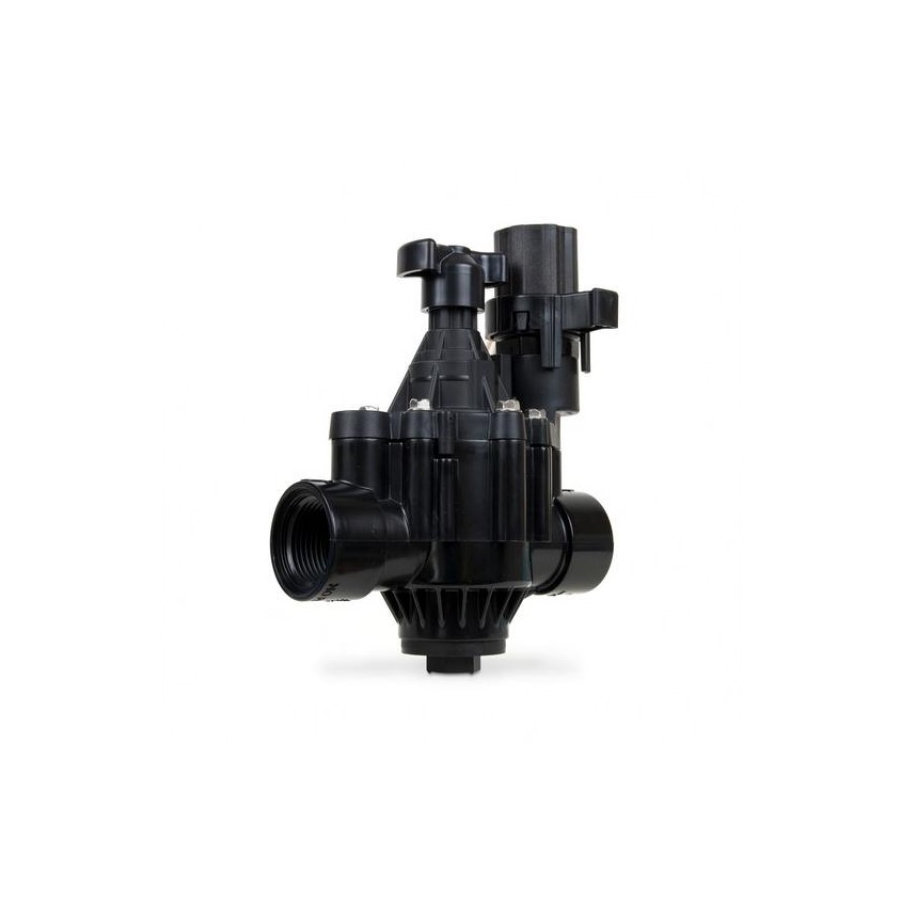
Features
- Globe and angle configuration for flexibility in design and installation
- PVC and glass reinforced nylon construction
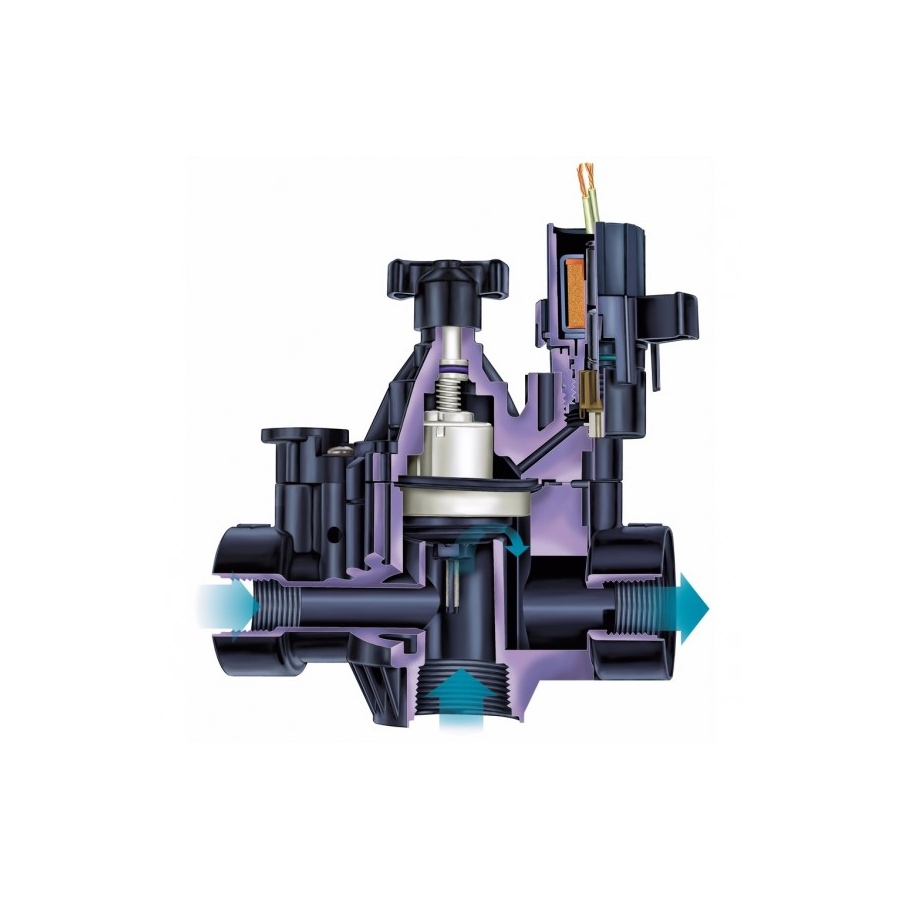
- Filtered pilot flow to resist debris and clogging of solenoid ports
- Slow closing to prevent water hammer and subsequent system damage
- Manual internal bleed operates the valve without allowing water into the valve box
- One-piece solenoid design with captured plunger and spring for easy servicing Prevents loss of parts during field service
- Non-rising flow control handle adjusts water flows as needed
- Normally closed, forward flow design Options (order separately)
- Accommodates optional, field installed PRS-D pressure regulating module
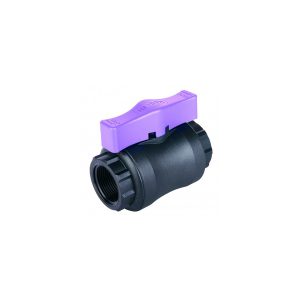
- Optional purple flow control handle for easy identification of non-potable water system
- PGA-NP-HAN (1” and 11 ⁄2”)
- PGA-NP-HAN2 (2”)
- Accepts latching solenoid for use with Rain Bird battery-operated controllers up to 150 psi (10.35 bar)
- Compatible with ESP-LXD decoders Operating Range
Overview
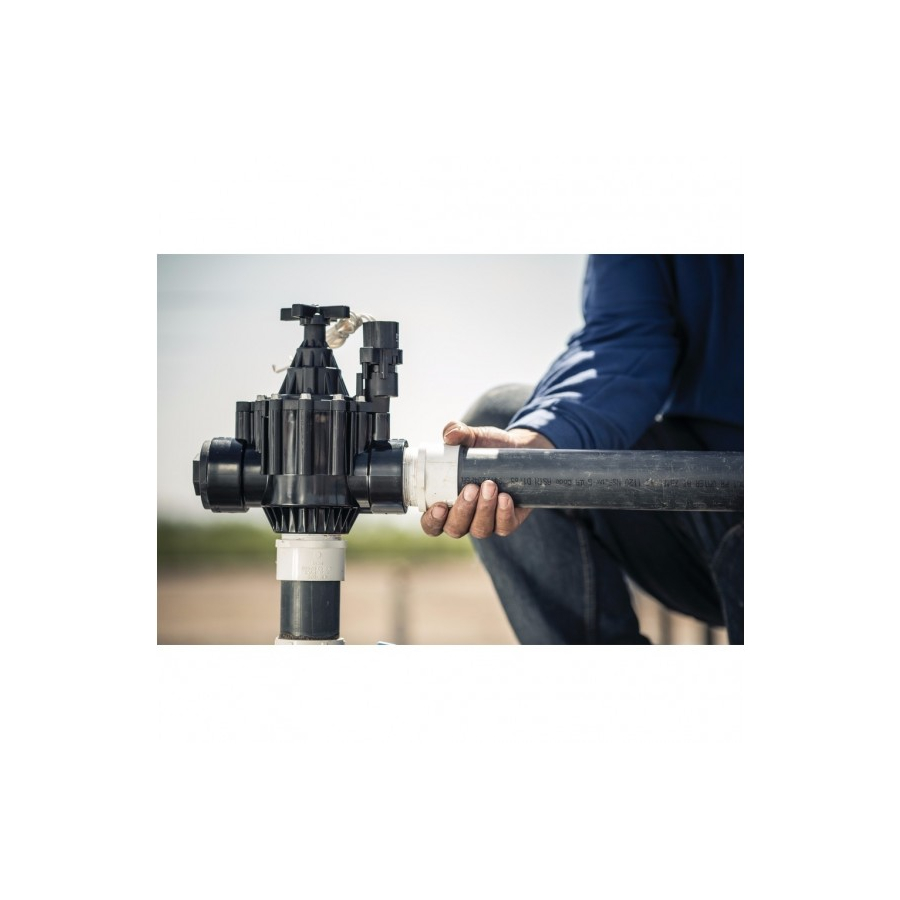
Whether the job calls for a globe or angle valve, PGA Series valves are the right choice. Loaded with features, these heavy-duty PVC valves are economical, easy to install and built to withstand constant 150 psi (10.35 bar) pressure and 2 to 150 gpm (0.45 to 34.05 m3 /h; 7.8 to 568 l/m) flows.
Specifications:
- Pressure: 15 to 150 psi (1.04 to 10.35 bar)
- Flow: 2 –150 gpm (0.45 to 34.05 m3 /h; 7.8 to 568 l/m)
- Flow with PRS-D: 5 –150 gpm (1.14 to 34.05 m3 /h; 19.2 to 568 l/m)
- Water Temperature: up to 110° F (43° C)
- Ambient Temperature: up to 125° F (52° C) Electrical Specifications
- Power: 24 VAC 50/60 Hz (cycles/sec) solenoid
Specs
- Pressure: 15 to 150 psi (1.04 to 10.4 bar)
- Flow without PRS-D option: 7.8 to 568 L/min
- Flow with PRS-D option: 19.2 to 568 L/min
- Water temperature: Up to 43°C - Refer to chart in photo section above
- Ambient temperature: Up to 52°C
Electrical Specifications
- 24 VAC 50/60 Hz (cycles per second) solenoid power requirement
- Inrush current: 0.41A (9.9VA) at 60Hz
- Holding current: 0.14A (3.43VA) at 60Hz
- Solenoid coil resistance: 30-39 Ohms, nominal
Dimensions
- 100-PGA: 18.4 cm x 14.0 cm x 8.3 cm
- 150-PGA: 20.3 cm x 1.,2 cm x 8.9 cm
- 200-PGA: 25.4 cm x 23.5 cm x 12.7 cm
- Note: The PRS-D option adds 5.1 cm to the valve height